Insights · Aviation
Crisis communication after an air accident: why the first hour decides everything
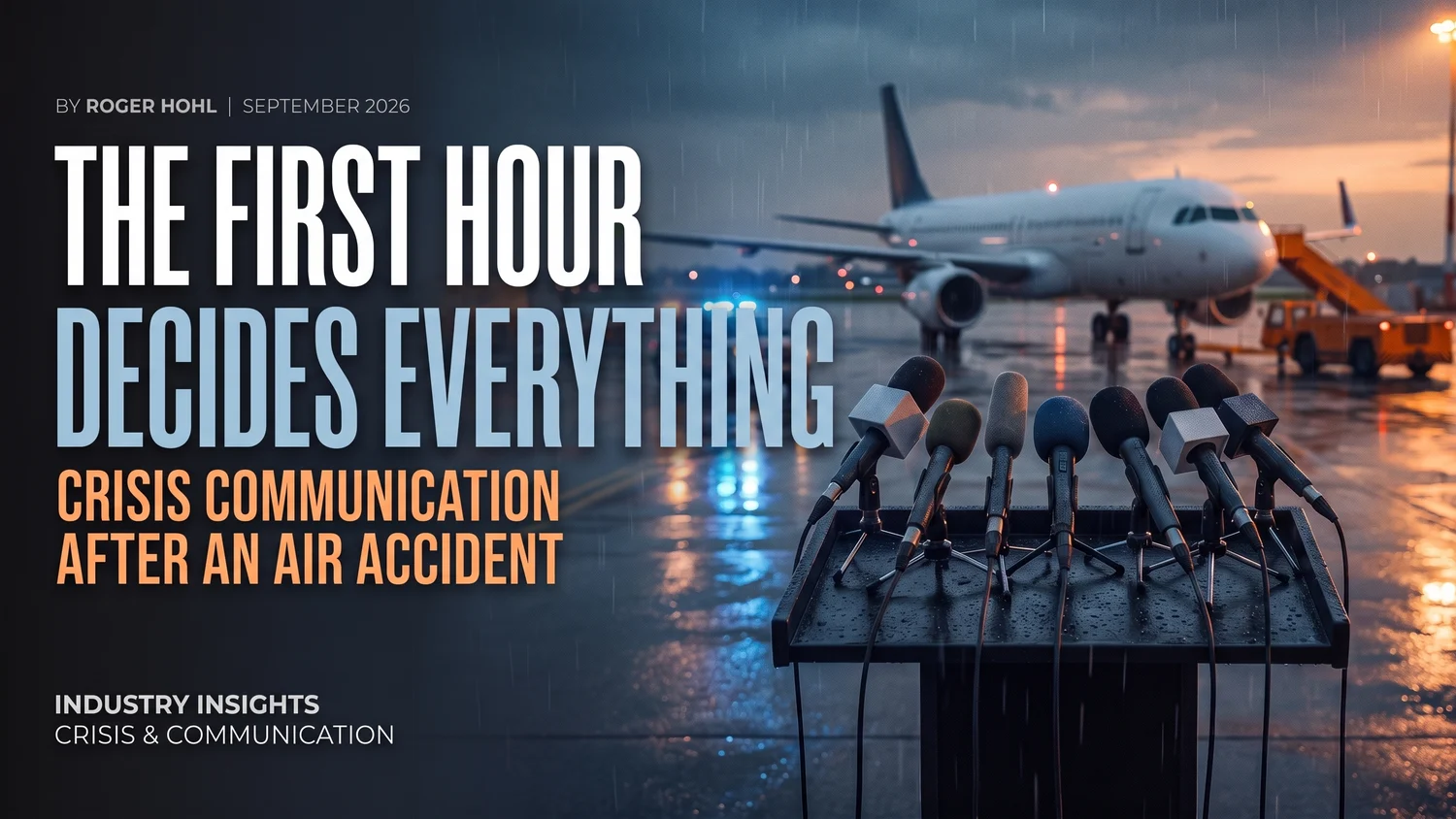
The phone rings late in the evening. On the line is a newsroom: there are reports of an incident, an aircraft is said to have left the runway on landing, and the first videos are already circulating on social media. Could I give an initial assessment?
Many of the calls I receive as an aviation expert start like this. And almost every time, I see the same pattern in the minutes that follow: the public already knows a surprising amount. Passenger videos, flight data from tracking apps, eyewitness accounts. Only the airline concerned remains silent. It checks, gathers information and waits for sign-off.
This is precisely the gap in which a company either keeps or loses trust. And that gap is smaller today than ever before.
The new reality: the news is faster than the operations centre
In the past, an airline had time to get organised after an incident. By the time the first wire reports appeared, the crisis team had usually assembled. That time no longer exists.
Flight tracking services show almost in real time where an aircraft is and whether it is manoeuvring unusually. Passengers film on their phones and post while still on the apron. Newsrooms launch live blogs before the executive team has been fully briefed.
Anyone who only communicates once every fact has been confirmed communicates too late. That does not mean speculating. Quite the opposite. But silence is not perceived as diligence. It is perceived as a loss of control.
What has to happen in the first hour
From my time as a press spokesperson and later as the CEO of an airline, I know that the first hour cannot be improvised. It has to be prepared down to the last detail. Four things are decisive.
1. A first statement within minutes. It does not need to say much: what is known, what is not yet known, what the company is doing right now and when the next update will follow. A statement like this can be prepared as an approved template that only needs completing on the night.
2. People before technology. The first message is for the people involved: passengers, crew and their families. Aircraft type, route and sequence of events come later. Leading with technical data comes across as cold, even when it is not meant that way.
3. One voice. When the press office, management, the airport and the authorities say different things, mistrust sets in immediately. Who says what, when and on which channel must be agreed in advance. Not on the night of the event.
4. A fixed rhythm. Updates at clear intervals, even when there is little new to report. A sentence such as “We will provide a further update at 11 pm” creates reliability. It takes pressure out of the situation, for the media and for your own team.
The most common mistakes
Over the years I have followed and commented on many events. The mistakes repeat themselves with remarkable regularity.
Speculating about causes. Establishing the cause is the job of the independent investigation authority. Anyone who speculates about weather, technology or crew in the first hours commits to a position before anyone actually knows anything. Statements like these often come back to haunt a company years later.
Legal language. Wording written mainly with liability in mind sounds defensive. The legal team belongs in the crisis team, but it must not set the tone.
The website goes down. In an emergency, traffic multiplies within minutes. Without a prepared, lightweight crisis page, a company is unreachable at exactly the moment everyone is looking for information.
The advertising keeps running. A classic and avoidable mistake: scheduled ads and social media posts keep appearing cheerfully while the world is talking about the incident. A single post like that can do more damage than the event itself.
Families learn it from the media. This is the most serious mistake of all. Caring for the families must take priority over any press release.
What the media need in that moment
Journalists in these situations work under enormous time pressure. They need verified basic information, a contact person who can be reached and context.
This is where independent experts come in. My job in a live interview is not to guess causes. It is to explain: what does a rejected take-off mean? What happens after an emergency landing? Who investigates an accident and how long does it take? And sometimes the most honest answer is simply that nobody knows yet.
Good context reassures. Speculation unsettles. Experts carry that responsibility just as much as companies do.
Preparation is everything
Crisis communication does not start with the event but months before it. This is what I recommend to airlines, airports and aviation companies:
- A crisis manual that is actually used rather than gathering dust
- A prepared crisis page for the website that can go live within minutes
- Approved templates for first statements in every relevant language
- Clear responsibilities and round-the-clock availability, including weekends and public holidays
- Agreed procedures with the airport, handling partners and authorities
- Regular exercises with realistic scenarios, including media training for the executive team
What good crisis communication does differently: It is prepared, human and consistent. It says what is known and, just as clearly, what is not yet known. And it keeps its promise to provide an update.
Conclusion: trust is won or lost in the first hour
Communication does not prevent an accident. But it determines how passengers, families, employees and the public see a company after an event, and whether they continue to trust it.
Aviation is one of the safest ways to travel because it systematically learns from every event. Communication needs the same mindset: being prepared before anything happens, so that the right words are ready in the first hour.
Would you like your crisis communication plan reviewed, or to engage Roger Hohl for a live assessment? Get in touch now.