Insights · Tourism
The off-season is the new high season: why hotels must rethink autumn
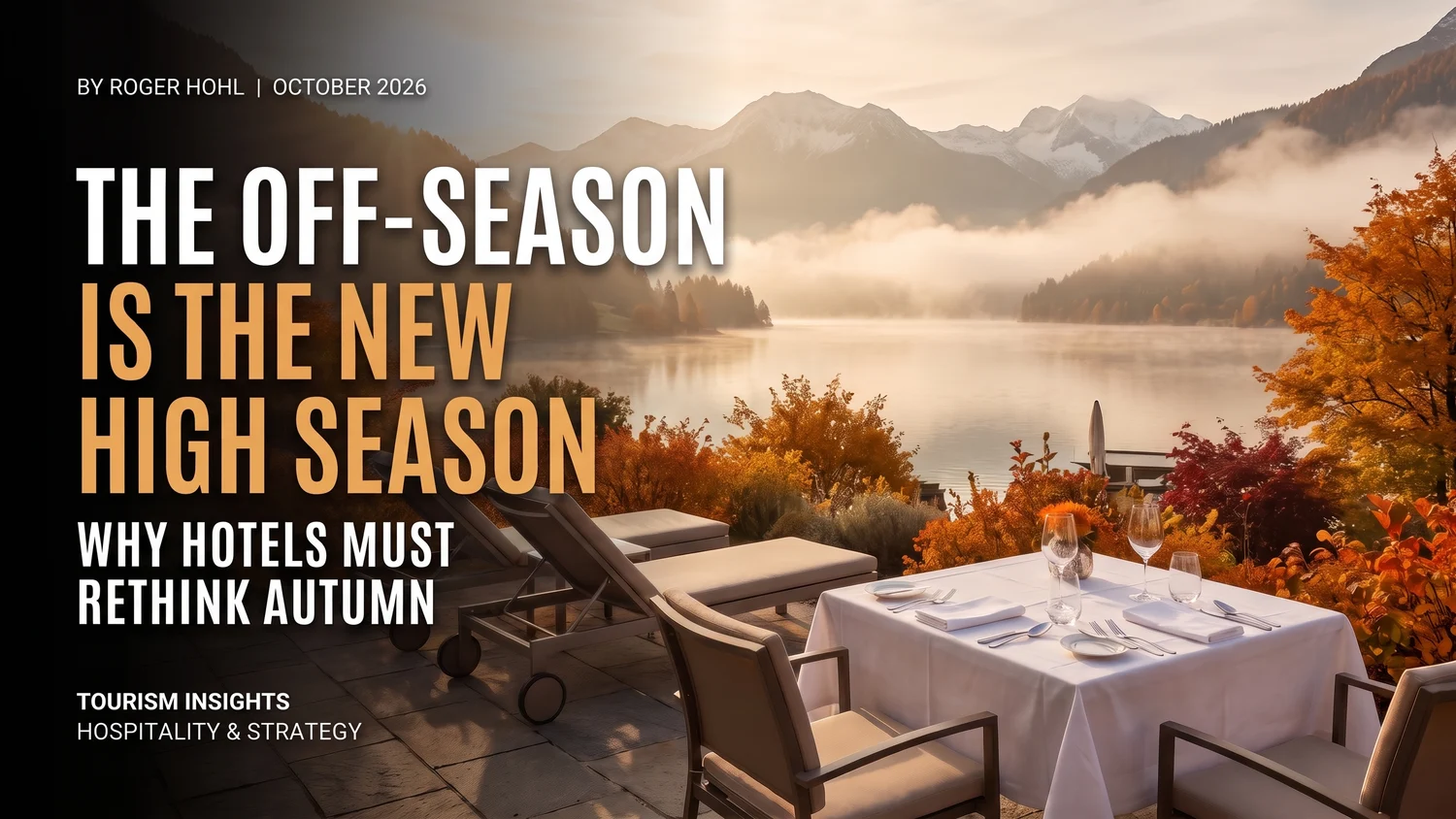
An October evening at an elegant hotel on an alpine lake. The light is golden, the air is clear, the lake is still. A perfect moment. And yet something is not right: the restaurant is serving a reduced menu, the spa closes at 6 pm, and behind the bar is a temporary member of staff who does not know the wine list. The room rate has been cut significantly. You can feel it everywhere.
As a guest, moments like these make you feel second class. Welcome, but not really expected.
I see this scene again and again when reviewing properties in the off-season. And it reveals a fundamental misunderstanding: many hotels treat autumn as a cost problem. In fact, it is one of the biggest opportunities the hotel industry currently has.
Why travel patterns are shifting
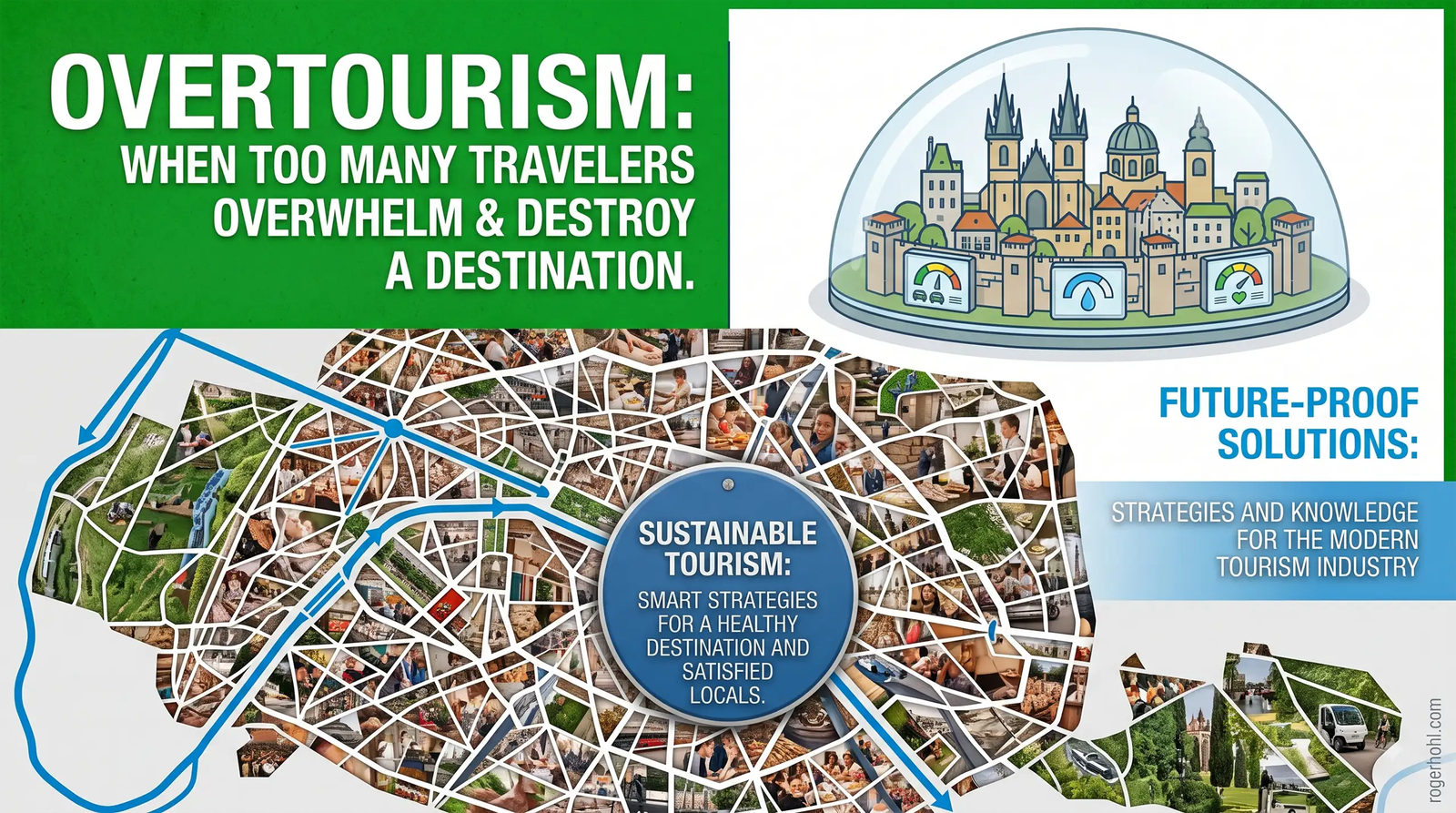
In August I wrote here about overtourism. The flip side of that problem is an opportunity: more and more guests are deliberately avoiding the crowded summer months.
There are several reasons for this. Summers in southern Europe are getting hotter, and many travellers no longer want a sun lounger in those weeks but somewhere cooler. Flexible working makes it possible to travel outside school holidays. A growing group of affluent guests without school-age children does not plan around the holiday calendar anyway. And anyone who has once experienced a destination without queues does not want to go back.
These guests are not looking for the cheapest deal. They are looking for calm, quality and genuine experiences. Exactly what autumn can offer, if it is staged properly.
The mistake: cutting until nothing is left
Many properties react to the off-season in a familiar way. Staff are reduced, outlets close, the offering is thinned out and the price comes down. That looks sensible from a business point of view. In reality, it sets off a downward spiral.
A reduced offering at a reduced price attracts price-sensitive guests. They judge the thinned-out experience critically. Reviews fall and the pressure on price grows. In the end the property has lost not only in the off-season but also in its positioning for the whole year.
The guest who is disappointed in October will not come back in July.
What smart properties do differently
The successful hotels I know do not think of the off-season as a gap between two high seasons. They develop a product of its own for it.
1. A theme of its own for autumn. The grape harvest, mushroom season, game cuisine, hiking in golden light, culture and concerts, spa days with mist over the lake. Autumn has stories that summer cannot tell. Those who stage them consistently are selling occasions rather than rooms.
2. Increase value instead of cutting price. Dinner with the winemaker, a guided walk with a local, late check-out as standard. Elements like these cost little, justify a stable rate and stay in the memory.
3. Target the right audiences. Couples without children, discerning food and wine travellers, teams on retreats and workshops, guests who stay for several weeks and work remotely. Each of these groups needs its own message and a suitable offer.
4. Do not thin out the service. For me this is the most important point. A smaller offering is fine as long as all of it is good. Better one restaurant at full quality than two outlets at half strength. Guests forgive a shorter menu. They do not forgive an indifferent welcome.
5. Work with the destination. Markets, festivals, cultural programmes and partnerships with local businesses make a region attractive outside the main season too. A single hotel cannot achieve that alone, but a shared strategy can.
The underestimated lever: year-round teams
The shortage of skilled staff in hospitality is no secret. Many properties make it worse themselves by cutting jobs in the off-season and then having to recruit new seasonal workers every spring.
Treating the off-season as a business in its own right makes it possible to employ people all year round. That brings stability, keeps know-how in the house and raises service quality across the entire year. A well-practised team is the best guarantee of a consistent guest experience.
Conclusion: the off-season is not a stopgap
The hotel industry is at a turning point. Guests are spreading their travel differently across the year, and many destinations want to encourage exactly that. Properties that treat autumn as a season in its own right, with its own product and full standards of quality, will benefit.
Those who keep cutting until nothing is left are giving away not just revenue but trust. And in the luxury segment, trust is the most valuable currency there is.
Would you like to know how guests really perceive your property in the off-season, or develop a concept for autumn? Get in touch now.