Insights · Tourism
Mystery shopping in luxury hotels: what really gets tested and what properties need to improve
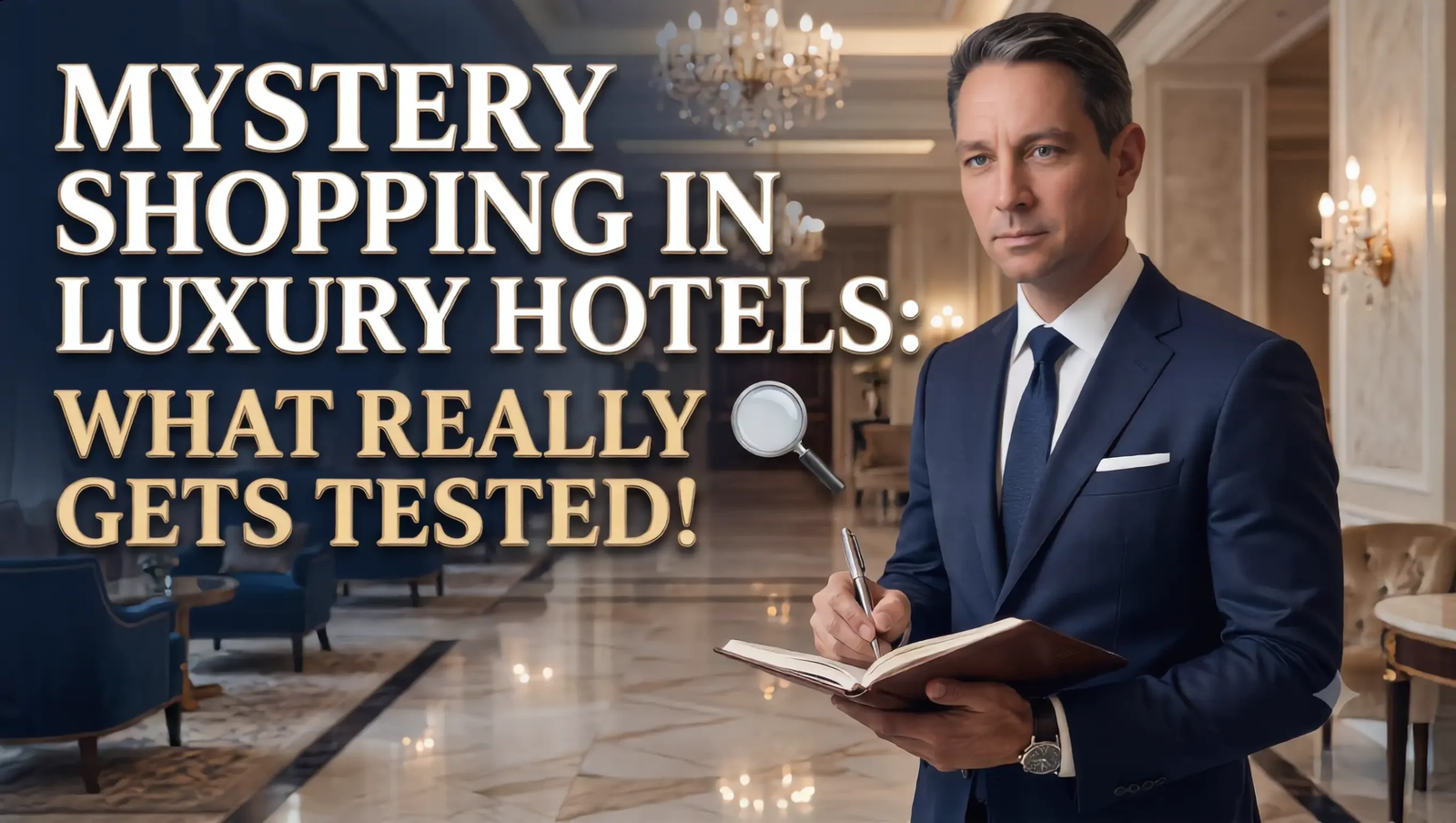
I am sitting at the bar of a five-star hotel in the centre of a major European city. It is 10:30 pm. I have checked in, inspected the room, evaluated the restaurant. Now I am testing how the bar team responds to a guest sitting alone who does not ask for the drinks menu, who simply waits.
After four minutes, no one asks if I would like something. After seven minutes, a member of staff walks past without looking at me. After eleven minutes, someone finally approaches me: “What can I get you?” No name. No smile. No eye contact.
This is not an isolated incident. It is a pattern I encounter in properties charging 600 francs per night that somehow cannot imagine their service gaps are visible. They are. And that is precisely what my work is about.
What mystery shopping really measures and what it does not
The biggest misconception I regularly encounter from hoteliers: mystery shopping is a control mechanism. A tool for catching staff out. This is wrong, and this attitude explains why so many properties learn nothing from these evaluations.
Mystery shopping in the luxury segment does not measure checklists. It measures emotional experiences.
Under the Forbes standard, the globally recognised reference for luxury hospitality, 70 percent of the rating is attributed to service quality and only 30 percent to physical infrastructure. This is not an arbitrary weighting. It reflects the reality that a perfectly renovated room cannot compensate for a mediocre service encounter. But an exceptional service encounter can make a guest forget a minor room imperfection.
What I test is not “Did check-in take less than three minutes?” but rather: did the guest feel expected when entering the lobby? Did the concierge offer a spontaneous recommendation without being asked? Did the team create a genuine moment of surprise?
These moments cannot be inventoried. They must be experienced.
The five areas where luxury properties consistently fall short
Over the years I have completed hundreds of stays in four- and five-star properties across Europe, the Middle East, and Asia. The same weaknesses appear again and again.
1. The first impression at check-in. This moment matters more than almost anything else. Is the guest addressed by name? Are they guided through the lobby or processed at the front desk? Is the room explained or is the key simply handed over? A surprising number of properties underestimate how much is at stake in those first three minutes.
2. Consistency across all touchpoints. An excellent dinner followed by careless room service destroys the experience, not through the sum of its flaws, but through the emotional rupture a single lapse creates. The guest who orders tea at midnight and waits twenty minutes forgets the three-course menu from the evening. This inconsistency is the most common problem I find.
3. Handling the unexpected. The most powerful test in mystery shopping is a deliberately created situation that does not go to plan: an incorrect bill, an unusual request, a complaint. How does the team respond? Naturally, solution-focused, without the guest needing to insist? Or hesitantly, apologetically, with references to “the policy”? Luxury reveals itself precisely in these moments.
4. Personalisation. Luxury guests do not want generic service. They want the feeling that the property knows them, even on a first visit. A returning guest whose favourite wine is ready without being asked. A first-time visitor whose dietary requirements from the booking process are known and respected. These details are technically simple to implement today. Most properties still fail to do so.
5. The departure. Check-out is the final impression and the most frequently neglected. Too many properties treat a departing guest as a completed transaction. No personal farewell, no question about the stay, no genuine invitation to return. The last moment is as formative as the first. Properties that understand this have measurably higher return rates.
What properties can actually do
Mystery shopping is not a final verdict. It is a snapshot and, above all, a foundation for development.
The most valuable insights from my evaluations are not those that show what went wrong. They are the ones that reveal why it went wrong. Missing leadership on the floor. No empowerment for staff to make independent decisions. Service standards that exist on paper but have never been genuinely practised.
Properties that take mystery shopping seriously (not as a control tool, but as a learning process) see measurable improvements in guest satisfaction scores and return rates. One property I worked with improved its online rating on a major platform by 0.4 points following a targeted evaluation and three months of structured training. That sounds small. In luxury hospitality, it is the difference between third place and first place in a destination.
What the guest is actually paying for
A guest paying 600 or 1,000 euros per night is not buying a bed. They are buying the feeling of being genuinely welcome for that period of time. No detail is superfluous, no moment unimportant. And what they remember is not the thread count of the linen, but the bartender who only looked up after eleven minutes.
The property from the bar scene I described at the beginning did act on my report. Six months later, I checked in again. This time, someone approached me before I had even sat down. By name.
That is the difference mystery shopping can make. When you allow it to.
Would you like to know how your property is genuinely perceived from a guest’s perspective? Get in touch now.